Economist challenges claims against Brazil’s legal betting market at STF hearing
Regulation3 min read
In brief
- Economist Erick Brasil challenged claims against legal betting at a Supreme Federal Court hearing.
- He said authorised operators' 2025 GGR was R$37bn, under 0.5% of household consumption.
- He found no correlation or causation between betting and supermarket data cited by ABRAS.
- CNC defended the constitutionality of the provisional measure at the hearing.
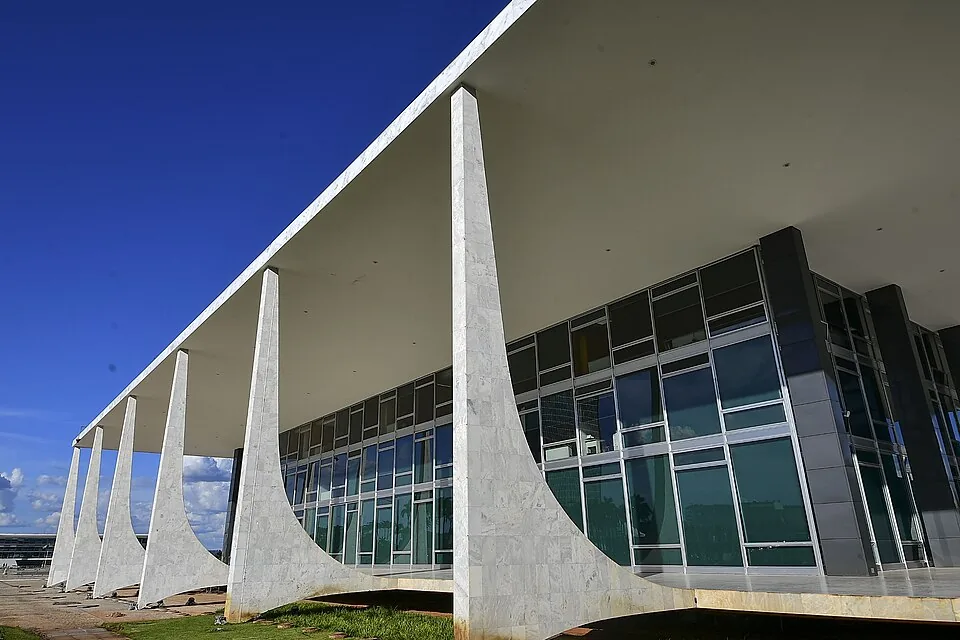

Economist Erick Brasil, who directs regulation and public policy at LCA Consultoria Econômica, relied on public data to dispute the three main arguments used to justify banning betting. Those arguments were household indebtedness, loss of GDP and higher consumption in supermarkets. The afternoon session of the public hearing was convened by Justice Luiz Fux, who is the rapporteur of ADI 8027 and the other actions against Provisional Measure 1.394/2026. Brasil represented the Associação Brasileira de Liberdade Econômica (ABLE) and also spoke in time given up by the Associação Internacional de Gaming, AIGAMING.
According to the Ministry of Finance, gross gaming revenue (GGR) of authorised operators in 2025, the first year of the regulated market, was R$37bn. Brasil put total household consumption in GDP at about R$8 trillion. On that basis, he said legal betting came to less than 0.5% of household consumption in 2025. He asked how spending of that size could be treated as the main factor in a systemic crisis of default and indebtedness. For comparison, he said households spent twice as much on streaming as on betting. He gave mobile phones and accessories as R$152bn. He put interest payments at almost R$700bn, about 19 times the spending on betting.
Brasil did not deny that problems exist, and acknowledged individual cases of default linked to gambling, which he described as a public health matter. He said Central Bank and academic studies point to three structural causes of Brazilian indebtedness: very high interest rates, easy and expensive credit, and low financial education, especially among low earners.
On the claim that betting subtracts from GDP, Brasil said part of the R$37bn returns to the economy through taxes and the contribution on GGR. He said only any profit remitted to foreign shareholders would leave the country, and that this is limited because the regulations require a Brazilian partner. In his view it is legitimate to debate whether the sector has a lower multiplier effect than others, but saying it reduces GDP does not hold up.
Brasil also addressed weekly figures from the Brazilian Supermarket Association (ABRAS), which its president João Galassi had cited hours earlier as proof that the end of betting raised food consumption. Brasil read the data differently, saying they show neither correlation nor causation. He said sales growth against the same weeks of 2025 had already been occurring through almost the whole year. He also said the R$37bn of GGR is a little over 3% of supermarket revenue.
The only strong correlation Brasil found was between the provisional measure and an increase in illegal sites, according to monitoring by LegitBet. He added that supply is not demand, and that LCA is still studying whether demand for the illegal market has grown.
Lawyer Ana Clara Marques de Barros Santos also spoke and told the court it should rule on what is constitutional, not make a political judgement. She said the government does not regularly publish data from the Sigap betting management system. She cited Lenad 3 (2024) as showing that more than 90% of bettors play recreationally and only 0.8% develop gambling disorder. She also cited the Secretariat of Prizes and Bets (SPA/MF) as showing that 70% of bettors spent up to R$50 a month, with an average session of 12 minutes.
Earlier in the hearing, the Confederação Nacional do Comércio de Bens, Serviços e Turismo (CNC), author of ADI 7721, defended the constitutionality of the provisional measure. The provisional measure has not yet been voted on by Congress.