Brazilian clubs tell STF betting restrictions threaten R$1bn in Série A revenue
Regulation3 min read
In brief
- Fluminense's president said betting companies provided R$1bn of about R$3bn in Série A commercial revenue in 2025.
- Flamengo's vice-president estimated annual losses of about R$430m.
- Clubs asked for legal certainty and a transition regime.
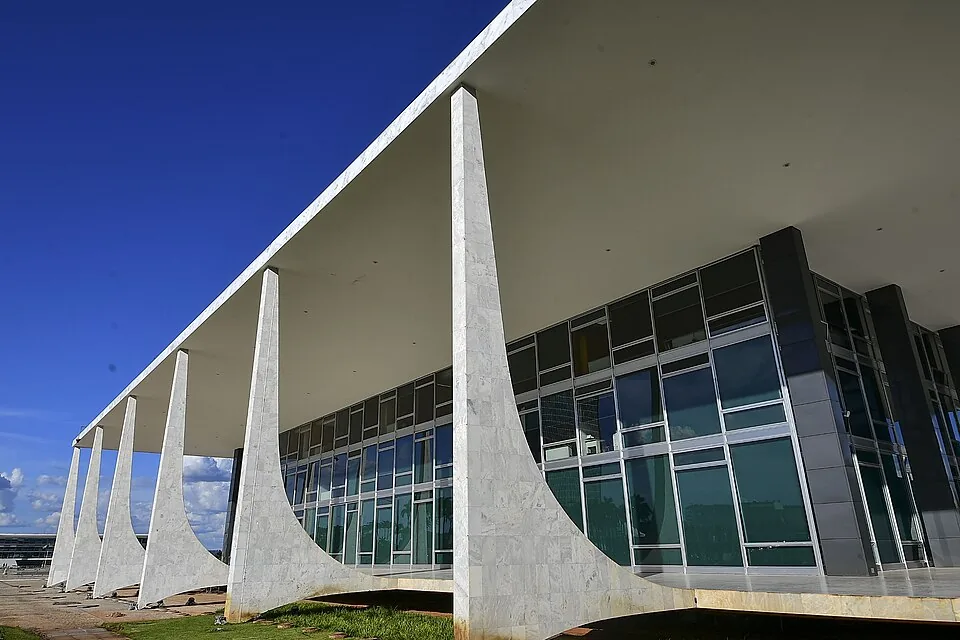

On Tuesday (3), football clubs began the round of presentations by amici curiae at the public hearing that Justice Luiz Fux, rapporteur of the challenges to Medida Provisória no 1.394/2026, convened at the Supreme Federal Court (STF). Flamengo, Fluminense, Botafogo, Cruzeiro, São Paulo and Corinthians, together with Fenapaf, told Fux about revenue losses. The hearing was suspended at 13h and resumed at 14h30, with the remaining registered clubs speaking.
Fluminense president Mattheus Montenegro presented the figure the report described as the most striking of the session. Based on 2025 balance sheets, he said Série A clubs had about R$3bn in commercial revenue. Of that total, R$1bn, or 34%, came from betting companies, he said. He added that 14 of the 20 top-flight clubs had betting sponsorships.
Flamengo general vice-president Flávio Willeman estimated losses of about R$430m in annual revenue across football and Olympic sports, with more than 1,200 employees at risk. He said the club's contracts with the two betting companies that appeared on its shirt were signed under the legislation in force. According to Willeman, Flamengo planned the next four or five years on the basis of those contracts. He argued that the measure fails the reasonableness test. Flamengo also argued that the measure is unconstitutional for lack of relevance and urgency.
Montenegro said Fluminense, with recurring revenue of between R$600m and R$700m, faces an impact of R$200m. He said Série B clubs had been notified by the broadcast rights holder and were seeking a new offer. The largest offer received equals 50% of the current value, he said. Montenegro said clubs cannot adjust because salaries are the largest expense and the General Sports Law requires a club to pay 100% of an athlete's contract to the end if it is terminated. He compared transition periods for betting advertising restrictions as 56 months in Belgium, 36 in the United Kingdom, 12 in Spain and 10 in Italy, against 10 days in Brazil.
Lawyer Bichara Abidão Neto, speaking for SAF Botafogo, said the club stopped displaying on 7 October the master sponsorship contracted in November 2025. The report said Botafogo is in judicial recovery and that its plan counted on cash flow from the sponsorship. The club asked for urgent suspension of the measure's effects. As an alternative, it asked for at least a transition that respects the football calendar and the duration of existing contracts.
Cruzeiro said its five-year contract with a betting company was interrupted after one year and nine months. According to the club, the sponsorship was equivalent to four or five payrolls for athletes and staff and supported its women's football team.
São Paulo representative Daniele Mayr Holini focused on competition integrity. She said the ban did not remove data on clubs, athletes and championships from the market, as companies beyond the reach of the state continue to offer it. According to the club's figures, master sponsorship and sector advertising revenue totalled about R$101m from January to September 2026, around 30% of the period's total. São Paulo has the longest sponsorship contract in Série A, valid until 2030. The club asked for legal certainty, a transition regime and express maintenance of the integrity structures created by Law 14.790.
Corinthians asked for a modulation of the measure's effects and a transition period. Marketing executive Vinícius Manfredini proposed that clubs act as partners of the public authorities in awareness campaigns on gambling addiction, protection of minors and the risks of illegal platforms.
Fenapaf's representative said that the law gives athletes a share of betting revenue, but bureaucratic obstacles prevent them from receiving it. He asked Fux to request data from the Finance Ministry and the Sports Ministry on amounts collected but not distributed to the more than 88 thousand professional athletes in the country.