Brazil betting groups challenge Provisional Measure 1.394 at Supreme Court hearing
Regulation4 min read
Brazilian gaming and legal associations argued at a Supreme Court public hearing that Provisional Measure 1.394 could push betting towards organised crime and undermine legal certainty, according to a report. ANJL representative Pietro Lorenzoni disputed the government’s premise that prohibition would eliminate gambling; Abracrim representative Milton Jordão warned that bettors could face money-laundering liability under an existing law.
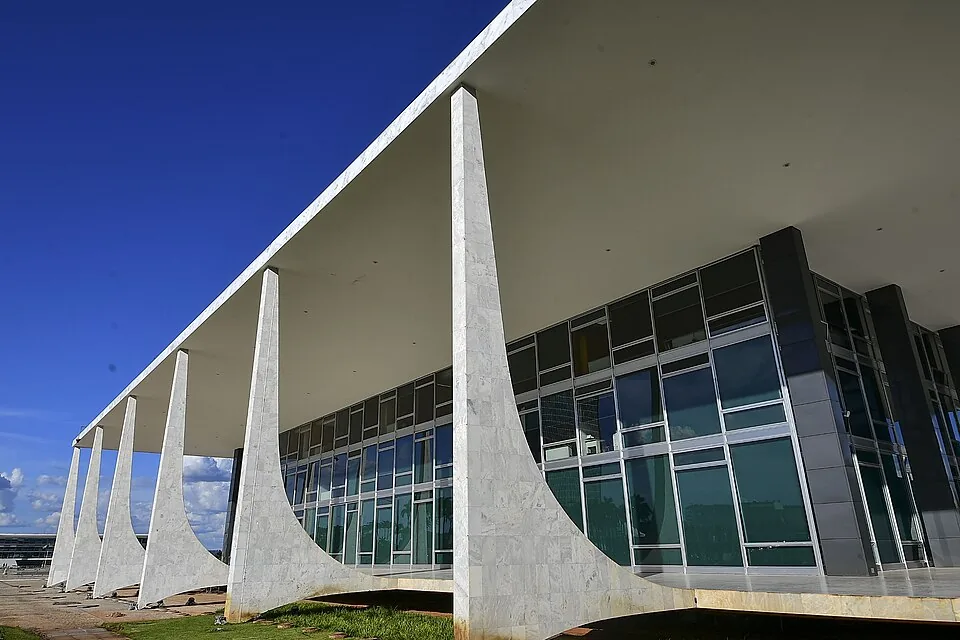

The Supreme Court (STF) devoted the afternoon of its public hearing on Provisional Measure 1.394/2026 to gaming-sector associations and lawyers. The hearing was convened by Luiz Fux, who is the rapporteur. ANJL, Abracrim, Abracopel, ANSEJA and IBJR argued that the measure hands the market to organised crime, breaches legal certainty and does not meet the urgency requirement. Their shared position was that the government assumes prohibition ends gambling, and that Brazilian history contradicts this.
Pietro Lorenzoni of the Associação Nacional de Jogos e Loterias (ANJL) spoke first and described an error of premise in the statements of the government officials who preceded him. He questioned the data used to justify the measure, noting that the Lenad 3 survey, which points to 11 million people with potential gambling disorder, dates from 2023. According to Lorenzoni, the survey predates regulation and covers all forms of gambling, not only regulated betting. He also said a CNC study on the impact of betting on families concludes that the appropriate response is more regulation rather than prohibition. Lorenzoni said betting companies have operated in Brazil since 2005, and that the market was worth R$28bn in 2023, before Law 14.790. He listed operator contributions that included licence fees of R$30m each and almost R$3bn paid to the public purse in addition to taxes. He also cited Finance Ministry data showing a 32% fall in the amount wagered in 2026 and more than 60% channelled to the regulated market. Lorenzoni further argued that the measure is wrong to provide that operators would not be entitled to compensation. He had intended to show a video of how easy it is to reach a betting site, but Fux did not allow it. Fux reasoned that, with the measure in force, the demonstration could amount to an unlawful act.
Milton Jordão spoke for the Associação Brasileira de Advogados Criminalistas (Abracrim) on behalf of its president. He warned that bettors, including people with a gambling addiction, could face money-laundering liability if they receive funds from a betting site, because paragraph 2 of article 50 of the Criminal Misdemeanours Law is in force. Jordão said the country is handing organised crime a market with technology, organisation and player data. He recalled that SPA Ordinances 615 and 143 had allowed police investigations to be launched. Jordão also criticised PL 5.477, which was filed shortly after the measure in order to criminalise the activity. Abracrim did not request a specific outcome. It argued that Fux should consider modulating the effects of the measure and providing a transition with legal certainty.
The representative of Abracopel, the association of state lottery concessionaires and permit holders, said the central point was federative. He said the measure removed the material competence of the states that the STF had recognised in ADPFs 492 and 493. He stated that eight authorisations in Paraíba, eight in Rio de Janeiro and two in Maranhão were overturned. He cited the jogo do bicho, prohibited for more than a century and still active. He also recalled a 2004 provisional measure aimed at ending bingo halls, which the Senate rejected, and said bingo continues to operate clandestinely. Fux interrupted him and asked that the subject be handled without a political focus.
Ana Sofia Monteiro of ANSEJA, the author of ADI 8024, argued that the impact estimate required by article 113 of the ADCT was understated. She said the measure's explanatory memorandum projected a loss of R$1.5bn in 2026 and R$5.1bn in 2027. She added that the 2027 budget bill, sent weeks earlier, already provided R$6.7bn under the fixed-odds betting headings. On her calculation, the loss reaches at least R$12.7bn, double the estimate. She said the calculation excludes a possible proportional refund of licence fees of up to R$1.6bn. Monteiro also said that, during the hearing, the TRF3 court granted an injunction setting aside the effects of the measure for one appellant company. She also pointed to a competitive inconsistency: the measure bans fixed-odds betting, which retains about 17.7% of the amount wagered, while preserving Caixa's exclusive lotteries, which retain about 66%.
The Instituto Brasileiro do Jogo Responsável (IBJR), the author of ADI 8027, limited its presentation to its request for an injunction. The organisation wants the effects of the measure suspended until Congress rules on it or until the merits are judged. Its speaker argued that there is no urgency on a subject Congress has debated for years and on which it opted for regulated gambling. The hearing was closed by the state attorney general's office and the Ministry of Sport, represented by the minister's advisers.